
Blog
Why Dharmendra Pradhan’s Resignation Is a Highly Calculated Political Move

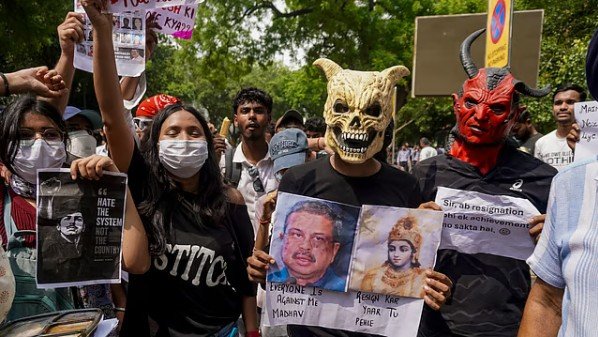
PrismNews: The sudden resignation of Union Education Minister Dharmendra Pradhan following the massive NEET-UG paper leak controversy was far from a simple exit. According to top government insiders, the decision was a highly calculated political and administrative strategy designed to defuse escalating student anger and prevent rival political factions from hijacking the unrest.
An Admission of Systemic Failures
Government sources revealed that the administration felt it could no longer ignore the reality of the situation. The recurring irregularities and loopholes in major national entrance exams were recognized as genuine institutional failures that demanded immediate accountability.By accepting Pradhan’s resignation, the Prime Minister effectively acknowledged these shortcomings, signaling to the public that the government takes the grievances of millions of affected students seriously.
The Motivation Behind the Exit
In his official statement, Dharmendra Pradhan emphasized that the chaotic developments over the last ten days had deeply saddened him. He stated that holding onto his position was “not a matter of personal prestige.”Pradhan made it clear that his primary objective was to safeguard national unity and protect the future of young aspirants from getting tangled in endless legal complications. His exit was designed to strip “anti-national forces” and opportunistic political groups of a central target, thereby reducing their ability to exploit student frustration for anti-India propaganda.
De-escalation and Legal Reforms
The high-profile exit occurred just 24 hours after the central government rolled out aggressive measures to fix the examination system. These new interventions include:
- Proposing a stringent anti-cheating law that carries heavy prison sentences for anyone involved in paper leaks.
- Setting up fast-track courts to ensure swift trials and immediate punishment for offenders.
A senior official noted that the administration’s primary goal was to ensure students do not become soft targets in a political crossfire. By addressing the protesters’ core demand accountability at the top the government hopes to clear major protest sites like Jantar Mantar and help students return their focus to their careers.
The Power of the CJP Movement
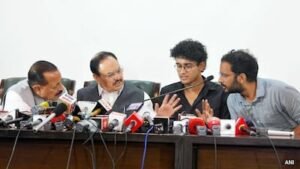
The historic protest was heavily driven by the Cockroach Janta Party (CJP), a youth platform created by former AAP functionary Abhijeet Dipke. What began as a satirical digital campaign in May rapidly snowballed into one of the country’s most powerful youth-led movements.While hailing Pradhan’s resignation as a monumental victory for democracy, Dipke emphasized at Jantar Mantar that the agitation is not entirely over. He maintained that the students still have outstanding demands that the government must address before the demonstrations are completely dismantled.
The Next Phase: Structural Overhaul
With the immediate political crisis under control, the government is shifting its entire focus toward rebuilding the country’s testing ecosystem.Future plans include handing over comprehensive investigations to central agencies like the CBI to root out corruption. Furthermore, the government intends to transition major national competitive examinations completely into Computer-Based Test (CBT) formats, ensuring ironclad security and restoring trust in national institutions.
- Trending
- 20 US Warships Blockade Iran as Trump Details ‘Semi-Negotiations’

- Jharkhand Govt. Bows to Student Protests, Cancels 3 Major Competitive Exams
- DFO Kendujhar’s Action Plan: Wildlife Care to Infra
- US-Iran Clashes Intensify, Triggering Sharp Volatility in Global Oil Markets

- Odisha Drives Tech Adoption With Specialized AI Workshop