

Blog
20 US Warships Blockade Iran as Trump Details ‘Semi-Negotiations’

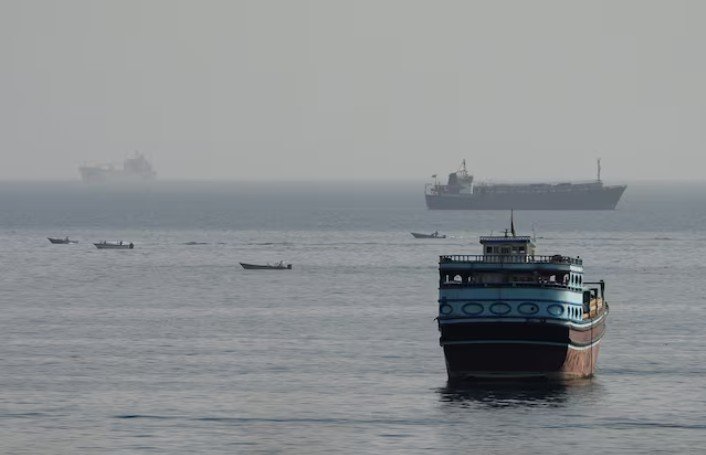
PrismNews: The United States military has reiterated its heavy naval presence in the Middle East, confirming that more than 20 American warships remain actively deployed to enforce a strict naval blockade against Iran.This development comes even as US President Donald Trump revealed that Washington is only engaged in “semi-negotiations” with Tehran to resolve the ongoing Middle East conflict.
CENTCOM Interventions by the Numbers
According to an official update by the US Central Command (CENTCOM) on X (formerly Twitter), American forces have strictly monitored maritime traffic to ensure compliance.
As of August 9, the tracking data reveals:
. 55 commercial vessels redirected by US forces.
. 2 vessels disabled for non-compliance.
. 2 vessels boarded by military personnel.
‘US Sailors stand watch on the bridge of USS Ross (DDG 71). Ross is one of over 20 US warships deployed to the Middle East supporting military missions, including strict enforcement of the US blockade against Iran,” CENTCOM stated.
The Strait of Hormuz Chokehold
The military standoff is concentrated around the Strait of Hormuz, a vital maritime chokehold connecting the Persian Gulf to the Gulf of Oman and the Arabian Sea.
Global Impact: In peacetime, nearly one-fifth of the world’s crude oil and natural gas passes through this narrow waterway.
Current Status: Iran continues to block commercial shipping through the strait, turning it into a primary flashpoint in President Trump’s regional strategy.
Where Do US-Iran Talks Stand?
Direct talks between Washington and Tehran are currently non-existent. Iranian Foreign Minister Abbas Araqchi confirmed that messages are exclusively being passed through international intermediaries.President Donald Trump described the US strategy as “low-keying” the situation.
“We are only semi-negotiating with them. We are just watching Iran with its huge inflation and the fact that they have no money,” Trump stated in an interview with Axios.Meanwhile, Iran is independently finalizing a maritime pact with Oman to define new shipping lanes, which will only take effect once the US meets Tehran’s demands.
Iran’s Demands for Reopening the Strait
The Secretary of Iran’s Supreme National Security Council, Mohammad Baqer Zolqadr, along with Foreign Minister Araqchi, outlined the strict conditions required before reopening the Strait of Hormuz:
- Financial Compensation: US must pay for damages caused during widespread attacks on Iranian territory.
- Sanctions Relief: Immediate lifting of economic and trade sanctions on Iran.
- End of Blockade: Complete removal of the US naval blockade in the Gulf.
- Asset Release: Unfreezing of all blocked Iranian financial assets worldwide.
- Regional Ceasefire: Halting US aggression against Iran and its allies in Lebanon, Palestine, Yemen, and Iraq.
Iran maintains it will not enter direct talks as long as Washington continues to violate the interim diplomatic agreement signed in June.
- Trending
- 20 US Warships Blockade Iran as Trump Details ‘Semi-Negotiations’
- Jharkhand Govt. Bows to Student Protests, Cancels 3 Major Competitive Exams

- DFO Kendujhar’s Action Plan: Wildlife Care to Infra

- US-Iran Clashes Intensify, Triggering Sharp Volatility in Global Oil Markets
- Odisha Drives Tech Adoption With Specialized AI Workshop